Vibe-coded projects
Alongside R packages, I’ve recently been building small web apps and tools through “vibe coding” — quick, exploratory builds where I use AI-assisted development to turn an idea into a working tool as directly as possible. These are typically self-contained, browser-based, and built for a specific real-world need of mine.
Track Tag Manager
A local Python app for tagging and organising tracks, designed for DJ workflows.
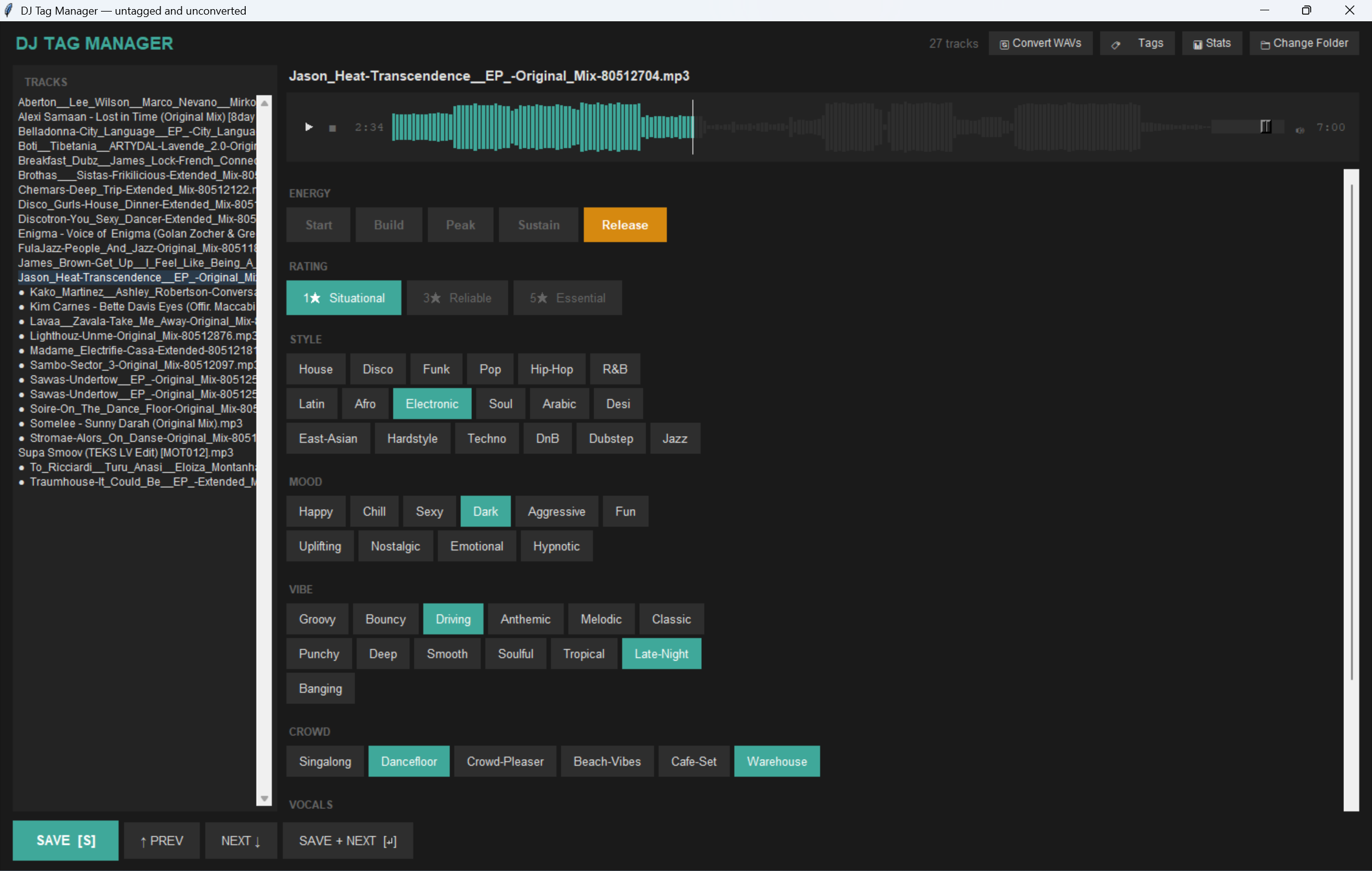
Track Tag Manager is a Python desktop app I built to help manage track metadata as part of a DJ workflow — making it easier to tag, filter, and curate tracks without being locked into a single piece of DJ software. It runs locally and offline, so your library never leaves your machine.
- Project page: https://martinctc.github.io/track-tag-manager/
- Source code: https://github.com/martinctc/track-tag-manager
Tri Harder
An AI-powered triathlon coaching app.
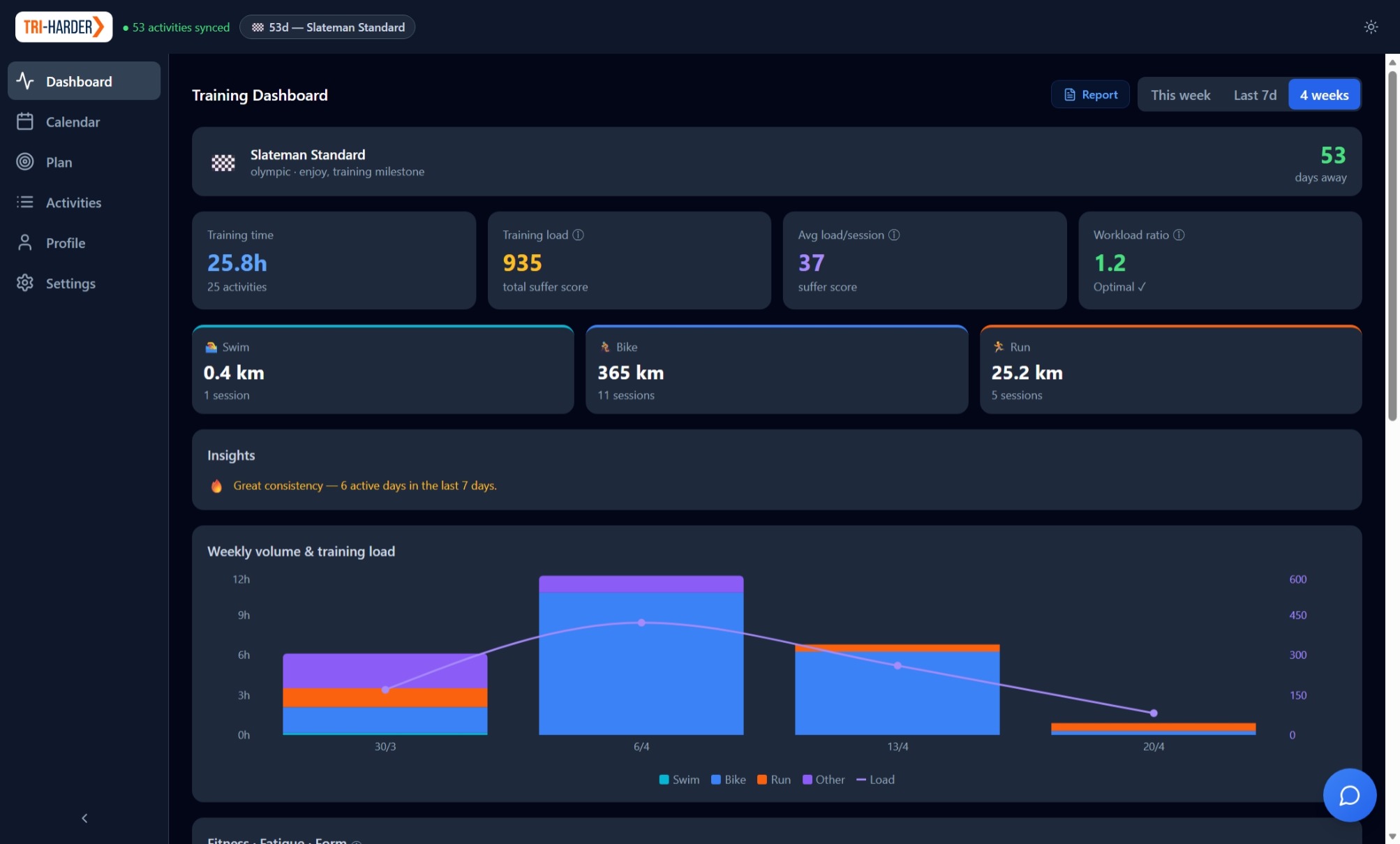
Tri Harder is a browser-based triathlon coaching app that uses AI to help athletes plan and adapt their training across swim, bike, and run. It’s designed to make structured, personalised coaching accessible without needing a paid platform — runs entirely in the browser, no install required.
- Live app: https://martinctc.github.io/tri-harder-app/
- Source code: https://github.com/martinctc/tri-harder-app
Wrava
A local-first writing app that tracks and analyses your writing activity.
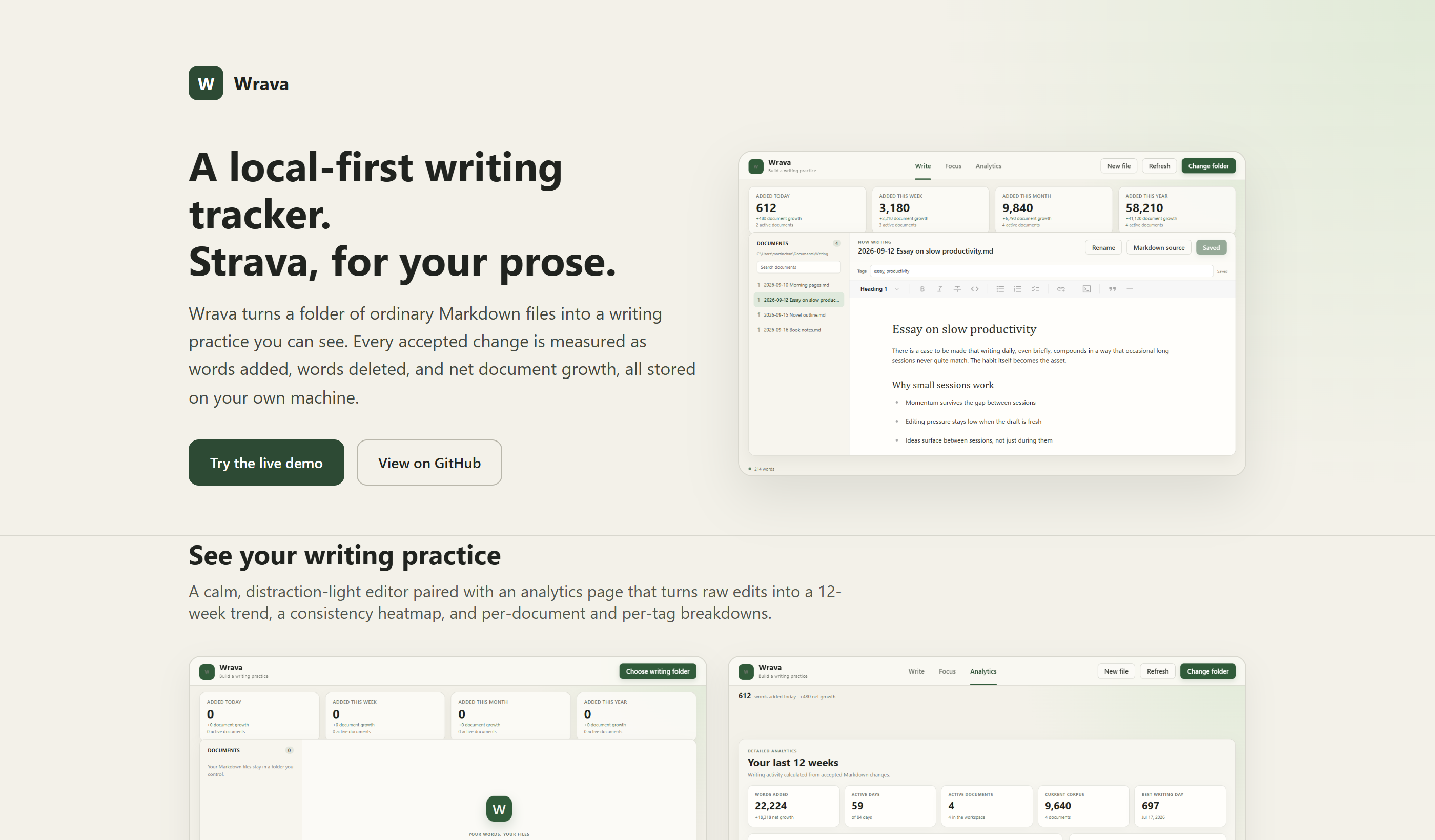
Wrava turns a folder of ordinary Markdown files into a writing practice you can see. Every accepted change is measured as words added, words deleted, and net document growth, so a distraction-light editor doubles as an activity tracker. The analytics view turns those raw edits into a 12-week trend, a consistency heatmap, and per-document and per-tag breakdowns. It is open source, and everything stays on your own machine.
- Project page: https://martinctc.github.io/wrava/
- Source code: https://github.com/martinctc/wrava
Dominium
A turn-based strategy game for 2 to 4 players, playable in the browser.
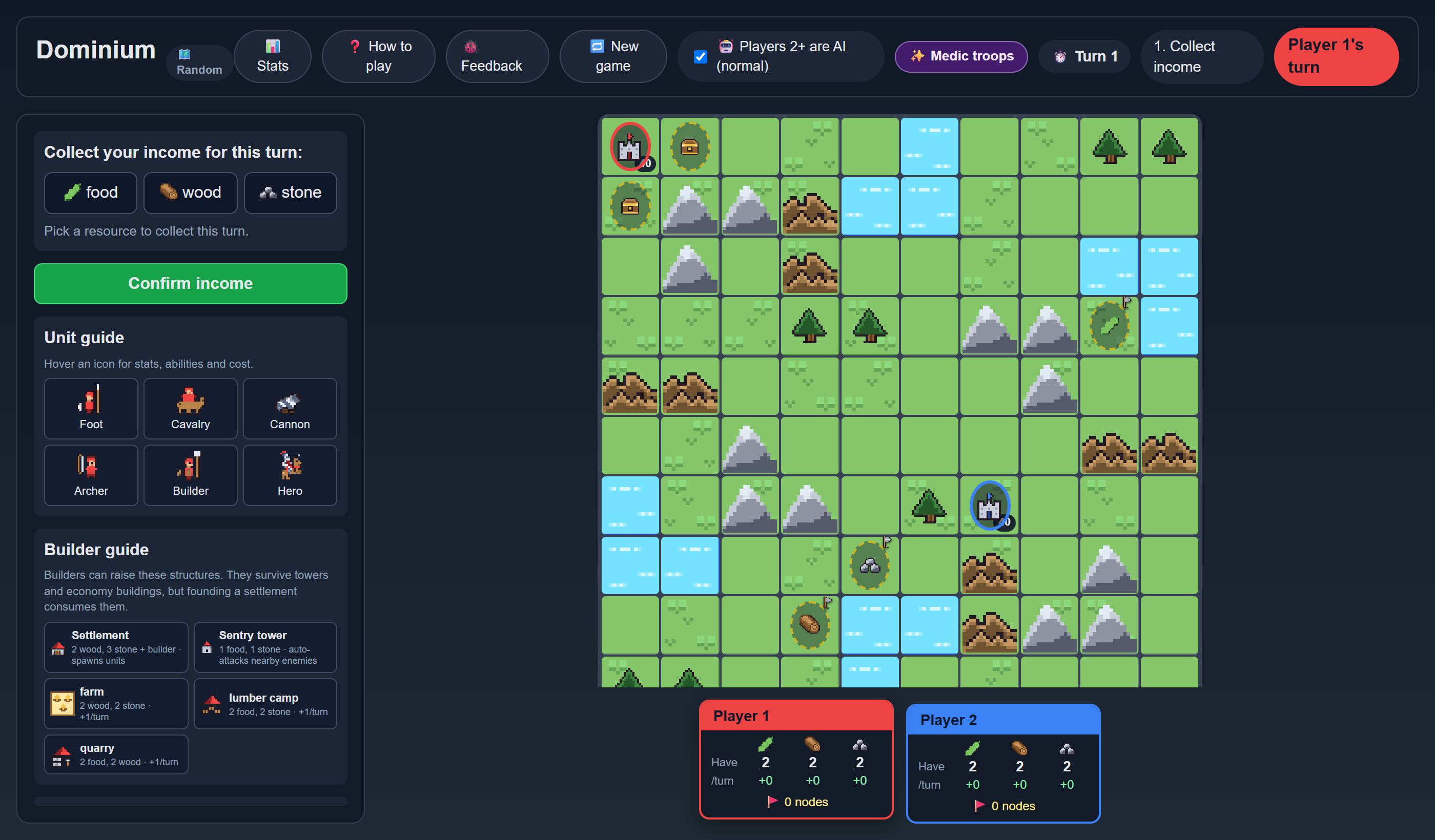
Dominium is a grid-based strategy game descended from a pen-and-paper game I played at school. Each player defends a base, gathers food, wood and stone, and builds an army to destroy every other base on the board. Turns run in three phases of income, build, and act, with six unit types, builder structures, fog of war, and terrain that shapes where you can move and build. You can play hot-seat with friends or against AI opponents, and there is an experimental isometric view alongside the classic pixel art.
- Play it now: https://martinctc.github.io/dominium/
- Source code: https://github.com/martinctc/dominium